
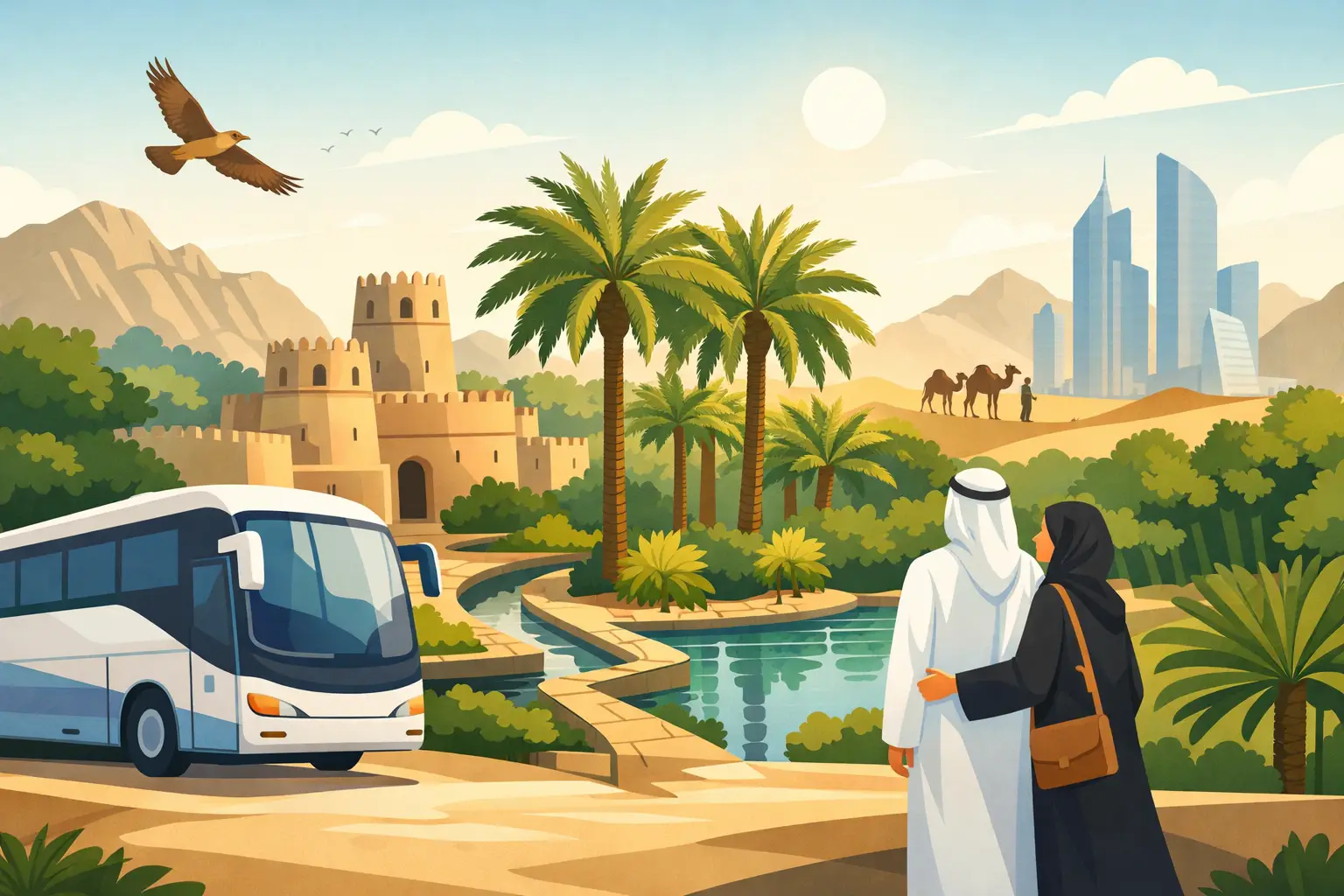
The sound changes first. After the wide highways and sunlit open land between Abu Dhabi and Al Ain, an Al Ain Oasis day tour brings you beneath a canopy of date palms, where narrow paths, cooling shade, and quietly flowing falaj channels set an entirely different pace. It is the UAE beyond the dunes: green, historic, and wonderfully calm.
For travelers with limited time, Al Ain makes an excellent full-day escape from Abu Dhabi. This garden city sits near the Oman border and has long been shaped by its natural springs, fertile soil, and strategic position along old trading routes. A guided day tour takes the uncertainty out of the journey, leaving you free to enjoy the scenery, heritage sites, local flavors, and mountain views without organizing transport or planning every stop yourself.
Why an Al Ain Oasis Day Tour Is Worth Your Time
Desert safaris deliver adrenaline, golden dunes, and unforgettable sunsets. Al Ain offers a beautiful contrast. Here, the experience is rooted in water, agriculture, and the traditions that allowed communities to thrive in the desert long before modern roads and cities.
Al Ain Oasis is part of the UNESCO-listed Cultural Sites of Al Ain. Its palm groves are fed by the falaj irrigation system, an ancient network of channels that distributes water through the oasis. As you walk under the palms, you can see how thoughtful water management created a lush landscape in a place where every drop has always mattered.
This is a strong choice for couples looking for a slower sightseeing day, families who want culture without a demanding schedule, and photographers drawn to textured mud-brick architecture, deep green palms, and the dramatic outline of Jebel Hafeet. It also suits visitors who have already experienced the big-city landmarks of Abu Dhabi and want to see a more traditional side of the Emirates.
What to Expect From Abu Dhabi to Al Ain
The drive from Abu Dhabi to Al Ain usually takes around 90 minutes to two hours, depending on your pickup location and traffic. The journey itself reveals a changing landscape, from the capital’s polished skyline to open desert roads, farms, and the greener surroundings of Al Ain.
A private vehicle or guided sightseeing tour is especially helpful because Al Ain’s highlights are spread across the city. Rather than navigating taxis between the oasis, forts, markets, and Jebel Hafeet, you can spend the day focused on the experience. If you are traveling with children or older family members, air-conditioned transport also makes the trip far more comfortable during warmer months.
A full-day itinerary works best. Trying to fit Al Ain into a half day often means rushing through the oasis or skipping the mountain, and both deserve time. The ideal pace leaves room for a shaded walk, photographs, a relaxed lunch, and a few heritage stops.
Walk Through the Palm Groves
The oasis is the heart of the day. Its pathways lead through thousands of date palms and other fruit trees, with occasional glimpses of irrigation channels between the greenery. The shade can feel surprisingly cool, particularly in the morning, and it is easy to understand why this landscape has been treasured for generations.
Move slowly here. The pleasure is not in checking off a landmark but in noticing the details: sunlight filtering through palm fronds, the earthy scent of the groves, and the soft sound of water moving through the falaj. Comfortable walking shoes are better than sandals with slippery soles, although the paths are generally easy for most visitors.
Morning is often the most enjoyable time for the oasis, especially from late spring through early fall. The light is softer, the air is more manageable, and you have more energy for the rest of the day’s discoveries.
The Falaj System and the Oasis Story
The falaj is more than a scenic feature. It represents a remarkable community system built around sharing water fairly. Water from underground sources was directed through channels to nourish the palms, crops, and homes of Al Ain. The oasis shows that Emirati heritage is not only about grand buildings or desert camps – it is also about practical knowledge, patience, and living in harmony with the environment.
For visitors from the United States, the oasis can feel like a hidden chapter of the UAE. Abu Dhabi’s modern architecture is impressive, but Al Ain reveals the foundations beneath that modern success.
Add Forts, Markets, and Mountain Views
An Al Ain day out becomes richer when the oasis is paired with nearby cultural and natural attractions. The exact order can vary with your tour schedule, opening times, and the season, but these stops create a rewarding mix of history and scenery.
Al Jahili Fort is one of the city’s most recognizable landmarks. Its sand-colored walls, watchtowers, and broad courtyard offer a striking look at traditional defensive architecture. The fort is also a favorite photography stop, particularly when the afternoon light warms the walls.
Al Ain Palace Museum, when open to visitors, adds another layer to the story. The former residence provides a more personal view of the UAE’s ruling heritage, with simple courtyards and rooms that reflect life before the country’s rapid development.
For a taste of local daily life, a stop near Al Ain’s market areas can be a welcome change from major shopping malls. Depending on the itinerary, you may find dates, spices, incense, textiles, and regional produce. Ask your guide about seasonal specialties and the best local snacks to try.
Then there is Jebel Hafeet. Rising above the city, this mountain delivers sweeping views over Al Ain, the desert plains, and the distant horizon. The road to the top is an attraction in its own right, with smooth curves climbing toward a viewpoint that feels far removed from the palm groves below. Late afternoon is especially appealing if you want softer light and a chance to watch the landscape change color before returning to Abu Dhabi.
When Should You Go?
October through April offers the most comfortable weather for walking outdoors, sightseeing, and enjoying Jebel Hafeet without intense heat. During these cooler months, an Al Ain tour can feel relaxed from start to finish.
Summer tours are still possible, but timing matters. Start early, keep outdoor walks shorter, carry water, and choose an itinerary with air-conditioned transport and indoor breaks. The oasis provides shade, yet midday heat in the UAE should always be taken seriously.
Weekdays can feel quieter than weekends, though the best day depends on your travel dates and local holiday periods. If photography is a priority, ask for an early departure. Morning palms and late-day mountain views are often more flattering than the strong midday sun.
What to Bring for a Comfortable Day
Keep your bag light, but prepare for changing conditions between shaded paths, open heritage sites, and the mountain. Sunglasses, sunscreen, a hat, a refillable water bottle, and a camera are sensible essentials. Bring a light layer in winter, as Jebel Hafeet can feel cooler than the city after sunset.
Dress respectfully for cultural stops. Loose, breathable clothing is ideal, and modest coverage is appreciated at heritage attractions and local markets. If you plan to take many photographs, a phone power bank is useful – this is a day with plenty of reasons to keep your camera out.
Make It a Day of Culture, Not a Race
The best Al Ain experience is not about squeezing in every possible stop. It is about combining the palms, the falaj, the fort walls, and the mountain road into one memorable view of the Emirates. Families may prefer extra time in the oasis; couples may want a slower lunch and Jebel Hafeet at sunset; history lovers may prioritize museums and forts.
With Abu Dhabi Desert Safari, you can choose a sightseeing experience that fits the rhythm of your vacation, with the convenience of organized transportation and a route built around Al Ain’s most captivating places. Leave space in your day for the unexpected moments too: a cool breeze under the palms, the scent of fresh dates, or a horizon that seems to stretch forever from the mountain above.

