
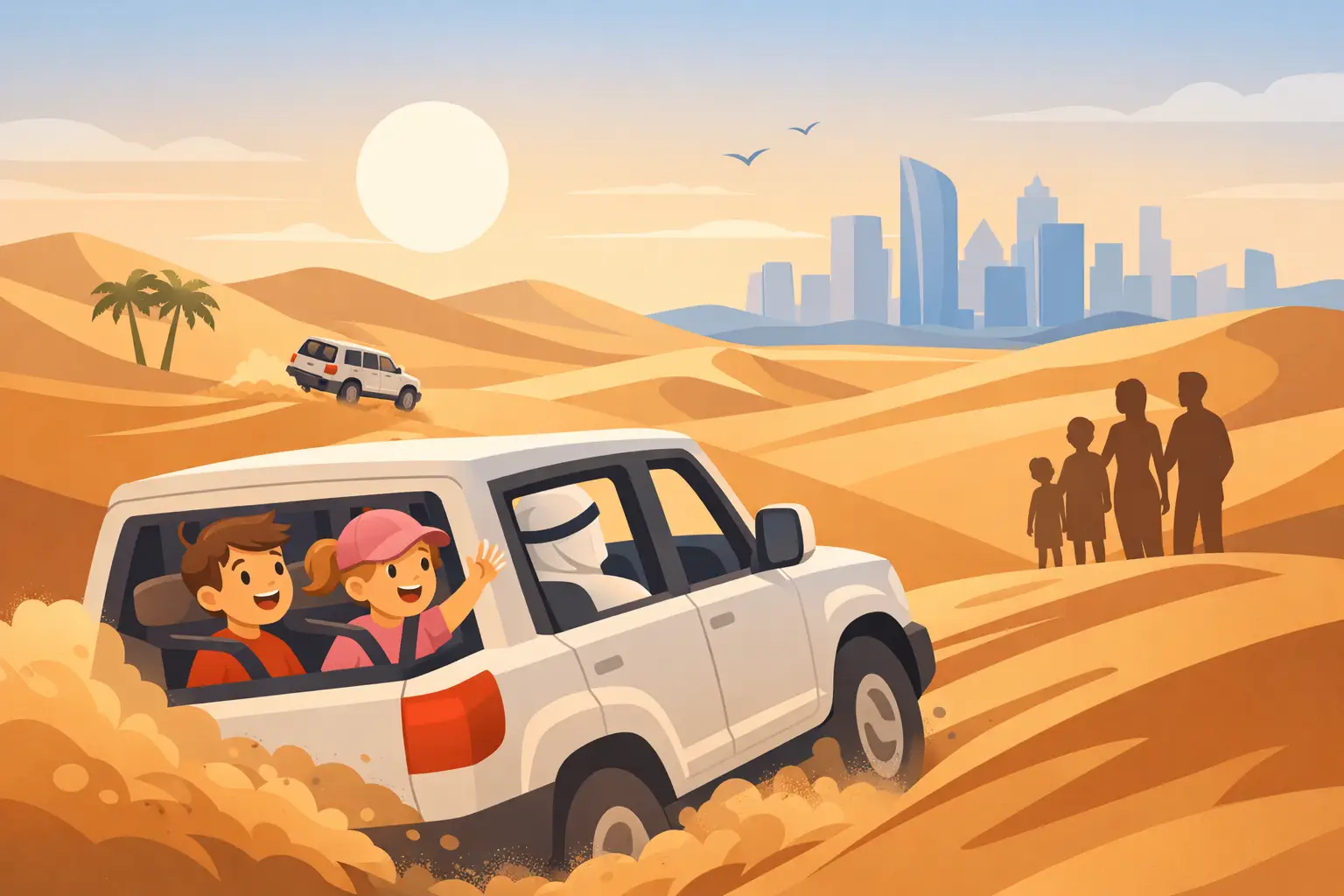
A Land Cruiser climbing a golden dune can feel like a roller coaster with a far better view. For many families, it becomes the moment everyone talks about long after an Abu Dhabi vacation ends. But is dune bashing safe for children? The honest answer is that it can be, when a child is an appropriate age, healthy enough for the motion, properly secured, and traveling with a responsible, licensed safari operator. It is not the right activity for every child, and a good family desert day leaves room for a gentler plan.
What Dune Bashing Feels Like for Kids
Dune bashing is an off-road 4×4 drive over soft desert sand. A skilled driver climbs steep dune faces, descends slopes, crosses ridges, and turns through the rolling terrain. The ride is exciting because the vehicle moves in ways it does not on a city road. There can be sudden changes in speed, side-to-side motion, steep angles, and a few stomach-dropping drops.
For an adventurous school-age child who enjoys rides and follows instructions, that energy may be the highlight of an evening safari. For a young child, a nervous traveler, or anyone prone to motion sickness, the same ride can be overwhelming. Safety is not only about avoiding an incident. It is also about whether your child can stay comfortable, calm, and securely seated throughout the drive.
Parents should resist the temptation to judge readiness by enthusiasm alone. A child who says yes at the hotel may feel very differently once the vehicle starts climbing a dune. Consider their response to roller coasters, winding roads, and bumpy boat rides, then choose the experience that matches their temperament.
Is Dune Bashing Safe for Children? It Depends on Preparation
A reputable operator treats dune bashing as a professional driving activity, not an improvised thrill ride. Drivers should know the desert route and conditions, use suitable 4×4 vehicles, and complete vehicle checks before heading into the dunes. Seat belts need to be worn throughout the ride, and passengers should remain seated with arms and hands inside the vehicle.
Families should ask directly about the operator’s minimum age policy before booking. There is no single age that fits every safari company, route, or child. Some operators set age limits for dune bashing because younger children may not safely tolerate the intensity of the ride or fit the vehicle restraint system appropriately. Those rules are there for a reason, not as a barrier to family fun.
A proper child restraint is another essential conversation. Tell the operator your child’s age, height, and weight in advance, and ask whether an appropriate child seat can be provided or whether you should bring one. Do not assume a standard seat belt alone is suitable for a smaller child. Confirm how the seat will be installed in the 4×4 and whether the child can remain safely secured for the entire off-road section.
The desert itself also changes from day to day. Wind, heat, sand conditions, and visibility can affect the route and the pace of the drive. Experienced guides adjust rather than forcing a high-energy ride when conditions call for care. That flexibility is one of the clearest signs that a tour is putting guests before a dramatic photo opportunity.
When Children Should Skip the Ride
Some children should not take part in dune bashing, even if they are eager to see the desert. Babies and very young children are generally better suited to a calm desert transfer or a camp-focused experience, subject to the operator’s policy. Children with a current illness, fever, significant motion sickness, back or neck concerns, recent injuries, or medical conditions affected by jolting movement should sit this activity out unless a medical professional has advised otherwise.
The same applies to children who become distressed by enclosed vehicles, steep movement, or fast changes in direction. A sunset over the dunes is still breathtaking without the adrenaline. Families can choose a scenic drive, arrive at the Bedouin-style camp early, or select a private experience where the pace can be tailored more closely to their needs.
Pregnant travelers and adults with relevant medical concerns should also ask a clinician and the tour operator before joining the dune-bashing portion. A family safari works best when every traveler is considered, not just the most adventurous person in the group.
Questions to Ask Before You Book
A few clear questions can turn uncertainty into a confident family decision. Ask whether the operator is licensed and insured for desert safari activities, what the minimum age is for dune bashing, and how children are restrained in the vehicle. Confirm whether the itinerary offers a gentler alternative if your child changes their mind.
It also helps to ask about pickup arrangements, the expected length of the off-road drive, and whether the tour includes breaks. A child who has been sitting in traffic, skipped a snack, and spent an hour in a vehicle may have a very different reaction than one who is rested and prepared.
Before departure, share anything relevant with the guide: motion sickness, anxiety around fast rides, a need for a car seat, or a preference for a smoother route. Good guides welcome this information. It helps them look after your family from the first dune to the final stop at camp.
For a practical family check, make sure you have these details confirmed:
- Your child’s age, size, and the operator’s stated eligibility policy
- A suitable, correctly fitted child restraint or confirmed seating arrangement
- Any health or motion-sickness considerations for children and adults
- A clear option to skip or shorten the dune-bashing portion
- Water, a light snack, sun protection, and a small motion-sickness kit if appropriate
Avoid a heavy meal immediately before the off-road drive. A light snack and water are usually more comfortable, especially on an afternoon or evening safari. If your child has used motion-sickness medication safely before, speak with their pediatrician or pharmacist about what is suitable for their age and health needs before traveling.
Helping Kids Enjoy the Desert More Comfortably
Set expectations honestly. Explain that the vehicle may tilt and bounce, but that everyone will wear seat belts and stay seated. Avoid building it up as something frightening or daring. Instead, describe it as a guided ride through the dunes, followed by the pleasures children often love just as much: soft sand underfoot, camel encounters, sandboarding, Arabian refreshments, a BBQ dinner, and captivating live entertainment beneath the starlit sky.
Choose the time of day thoughtfully. Evening safaris often give families cooler air, glowing sunset photos, and a festive camp atmosphere. Morning options can suit children who are freshest early in the day and prefer to return to the hotel before late evening. Private tours may be worth considering for families who want more control over pickup timing, pace, and activity choices.
Keep the desert experience balanced. Not every child needs to do every activity. One may cheer through the dune drive while another prefers henna art and watching the Tanoura performance. Letting each traveler enjoy the safari in their own way makes the day feel celebratory rather than pressured.
A Gentler Safari Can Still Be the Best Safari
Skipping dune bashing does not mean missing Abu Dhabi’s captivating desert beauty. A family can still watch the sky soften over endless dunes, take photos in the warm evening light, enjoy a short camel ride where appropriate, try sandboarding on a mild slope, and settle into camp for dinner and performances. The desert offers adventure at many speeds.
At Abu Dhabi Desert Safari, families can ask about experiences that fit their children’s ages, comfort levels, and preferred pace before confirming a package. The best choice is the one that lets your child feel secure enough to look up, laugh, and remember the golden dunes for all the right reasons.

