
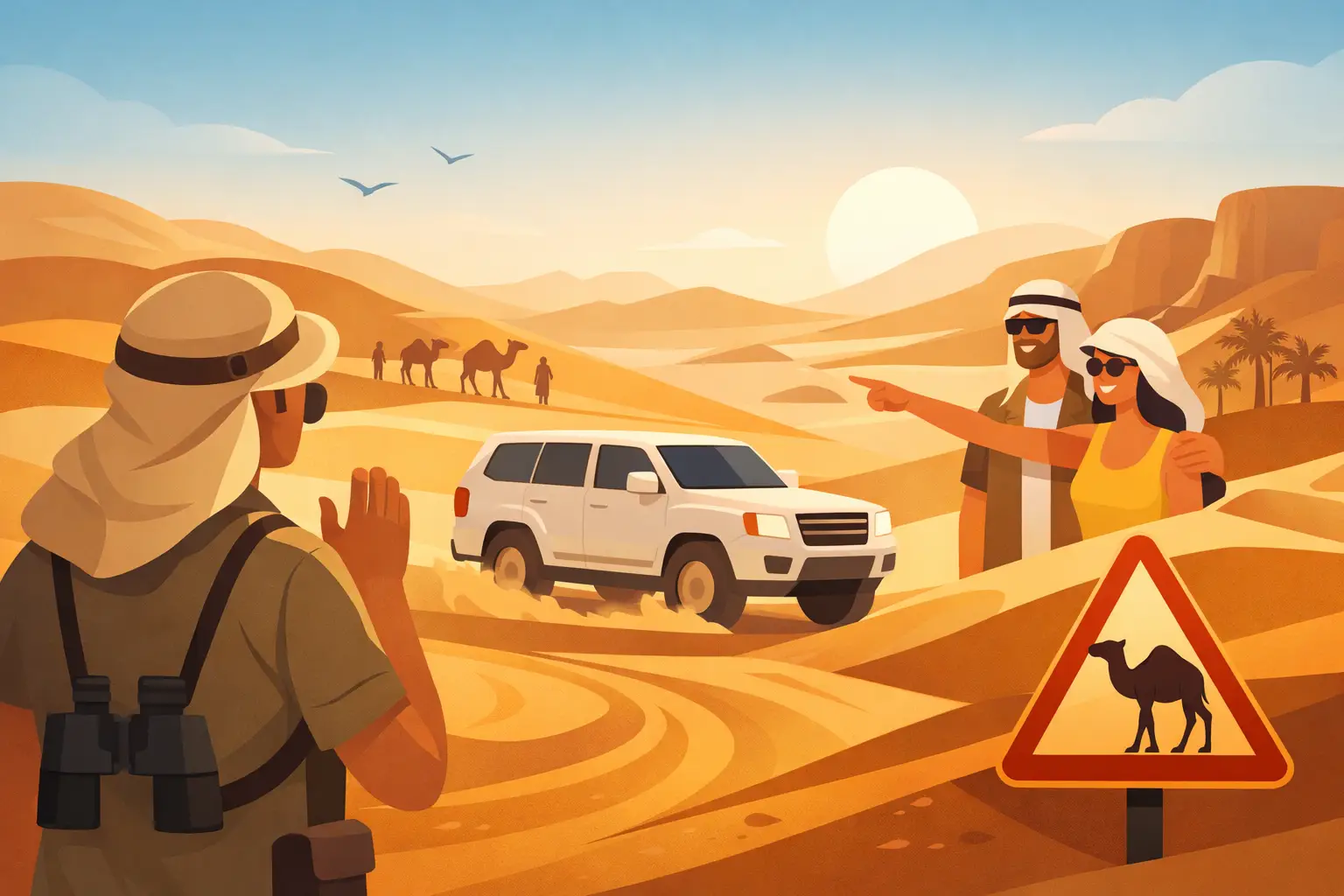
Golden dunes, a powerful 4×4, and a sunset over the open desert make for an unforgettable Abu Dhabi escape. Safari safety is what allows every thrilling moment to stay enjoyable, whether you are racing across soft sand, taking your first camel ride, or settling into a starlit camp for dinner and live entertainment.
A well-organized desert safari should feel exciting without asking you to guess what comes next. The right guide, vehicle, equipment, and preparation make a major difference. A few smart choices before pickup can help couples, families, photographers, and adventure-seeking groups enjoy the desert with confidence.
Safari Safety Starts With a Reputable Operator
The desert is spectacular, but it is not a place for unplanned off-road driving. Choose a licensed operator that uses maintained 4×4 vehicles, experienced desert drivers, and clear activity instructions. Your driver should know the dune routes, changing sand conditions, camp locations, and the safest way to respond if weather or visibility changes.
Before booking, read the package details carefully. Confirm pickup arrangements, the activities included, the expected tour duration, and whether an experience is suitable for children or guests with mobility concerns. A quality safari team will answer direct questions about dune bashing intensity, car seats, dietary requests, and any physical restrictions without making you feel rushed.
At Abu Dhabi Desert Safari, organized pickup and drop-off remove the pressure of navigating unfamiliar roads or trying to find a desert meeting point after dark. That convenience is not only useful for visitors on a limited vacation schedule – it also supports a safer, more relaxed experience from the first mile.
Before You Leave: Dress and Pack for the Desert
Desert temperatures can change quickly between afternoon and evening. In warmer months, light, breathable clothing is the most comfortable choice, while a light jacket or wrap can be welcome after sunset, especially on an overnight safari. Closed-toe shoes with a secure sole are ideal for dune walks, sandboarding, and quad bike areas. Sandals may be comfortable at camp, but they offer less protection around hot sand and vehicle activity zones.
Bring sunglasses, sunscreen, and a hat that stays secure in the wind. A small refillable water bottle is useful, although guided tours commonly provide refreshments. If you wear contact lenses, consider carrying lubricating eye drops or sunglasses with good coverage, as fine sand can be irritating on windy days.
Keep valuables simple. Take your phone and camera, but use a wrist strap, neck strap, or small zipped bag. Sand finds its way into open pockets, and a loose phone can disappear quickly during a dune stop or camel ride.
If you take prescription medication, bring enough for the full excursion and keep it with you rather than packed in a large suitcase at your hotel. Let your guide know privately about allergies, asthma, diabetes, motion sickness, or other conditions that could affect your comfort during the trip.
Safe Dune Bashing Means Listening in the 4×4
Dune bashing is one of the great thrills of an Abu Dhabi desert safari. The feeling of climbing a steep golden ridge, pausing at the crest, and sweeping down through soft sand is unlike a standard road trip. It is also an activity that requires professional driving and passenger cooperation.
Always wear your seat belt, including during short transfers across the dunes. Keep arms, hands, and cameras inside the vehicle, and avoid standing or changing seats while the 4×4 is moving. If you feel nervous, tell your driver before the ride begins. Many travelers enjoy a gentler route, and the best experience is the one that matches your comfort level.
Dune bashing may not be suitable for guests who are pregnant or have significant back, neck, heart, or recent injury concerns. It can also be uncomfortable for travelers prone to severe motion sickness. This does not mean missing the desert completely. A scenic desert drive, sunset stop, camp experience, camel ride, and dinner under the stars can still create a beautiful evening without the more intense off-road portion.
Avoid a heavy meal immediately before dune bashing, and skip alcohol before any driving or riding activity. A light snack and steady hydration are usually the better choice.
Quad Bikes, Sandboards, and Camels Need Different Care
Every desert activity has its own rhythm. The most reliable rule is simple: listen to the safety briefing even if you have tried something similar elsewhere. Sand behaves differently from pavement, snow, or a dirt trail, and local guides understand the terrain.
For quad biking, wear the supplied helmet correctly and keep any other recommended protective gear on for the full ride. Stay within the marked area, maintain a safe distance from other riders, and never attempt sharp turns, steep climbs, or jumps beyond your ability. Speed may look exciting in a video, but control is what makes a ride genuinely fun. First-time riders should choose a beginner-friendly option and follow the guide’s pace.
Sandboarding is usually approachable for beginners, but the walk back up a dune can be more tiring than the slide down. Start on a slope your guide recommends, wait until the landing area is clear, and keep your board away from other guests. Drink water after several runs, particularly in midday heat.
Camel rides offer a calmer connection to the desert, but camels stand and sit with a sudden forward-and-back motion. Hold the handle securely, follow the handler’s instructions, and lean as directed while the camel rises or kneels. Do not approach, feed, or touch a camel without guidance. These gentle animals are still large, and calm movements help keep everyone comfortable.
Heat, Hydration, and Timing Matter
The desert’s dry air can make travelers underestimate how much water they need. Begin hydrating before your pickup, take regular sips throughout the tour, and use shade whenever it is available. Waiting until you feel very thirsty is not ideal, especially after active experiences such as sandboarding or quad biking.
Watch for early signs of heat stress, including headache, dizziness, nausea, unusual fatigue, or confusion. Tell your guide immediately if you feel unwell. Resting in an air-conditioned vehicle or shaded camp area, drinking water, and cooling down early is far better than trying to push through discomfort for one more photo.
Morning and sunset safaris can be especially appealing for guests sensitive to high temperatures. Sunrise tours offer peaceful light across the dunes, while evening safaris pair cooler conditions with a breathtaking sunset, Arabian refreshments, BBQ dining, and cultural performances. For photographers, these times also bring softer light and more comfortable conditions for walking on the sand.
Safari Safety for Families and Groups
Families should share key details when booking, including children’s ages and whether a car seat is required. Young children may love camel rides, camp entertainment, henna art, and watching the sunset, while high-intensity dune bashing or independent quad biking may have age, height, or supervision limits. It depends on the child, the specific activity, and the operator’s rules.
Groups should agree on a simple meeting plan before entering the camp or stopping for photos. Desert camps can be lively, with dining areas, activity spaces, restrooms, and performance seating spread across the sand. Set a meeting point, keep an eye on children, and make sure one person knows where essential items such as medications and hotel details are stored.
At night, use marked paths and keep a phone light handy when moving around camp. The desert is peaceful after dark, but uneven sand, low seating, and dim lighting make a little awareness worthwhile.
Respect the Landscape and Your Guide
The desert is more than an adventure setting. It is a living landscape shaped by wind, wildlife, heritage, and the people who have traveled across it for generations. Stay with your guide in open areas, do not leave the vehicle during unscheduled stops, and avoid disturbing plants or animals you may spot along the route.
Take your rubbish back to camp or place it in designated bins. Do not leave bottles, tissues, food, or cigarette waste in the dunes. A clean desert preserves the captivating beauty that travelers come to experience and protects the environment for future visitors.
Weather can occasionally change plans. Strong winds, poor visibility, or unusual conditions may mean a route adjustment, delayed activity, or cancellation of one part of the itinerary. A professional team makes those calls for good reason. Flexibility is part of desert travel, and an adjusted plan is always better than forcing an unsafe one.
The most memorable safari is not the one where you take the biggest risk. It is the one where you can laugh through the dune ride, admire the changing colors of the sand, share a meal beneath starlit skies, and return to your hotel with stories worth telling. Choose the experience that suits your group, follow your guide’s lead, and let the desert deliver its excitement at the right pace.

