
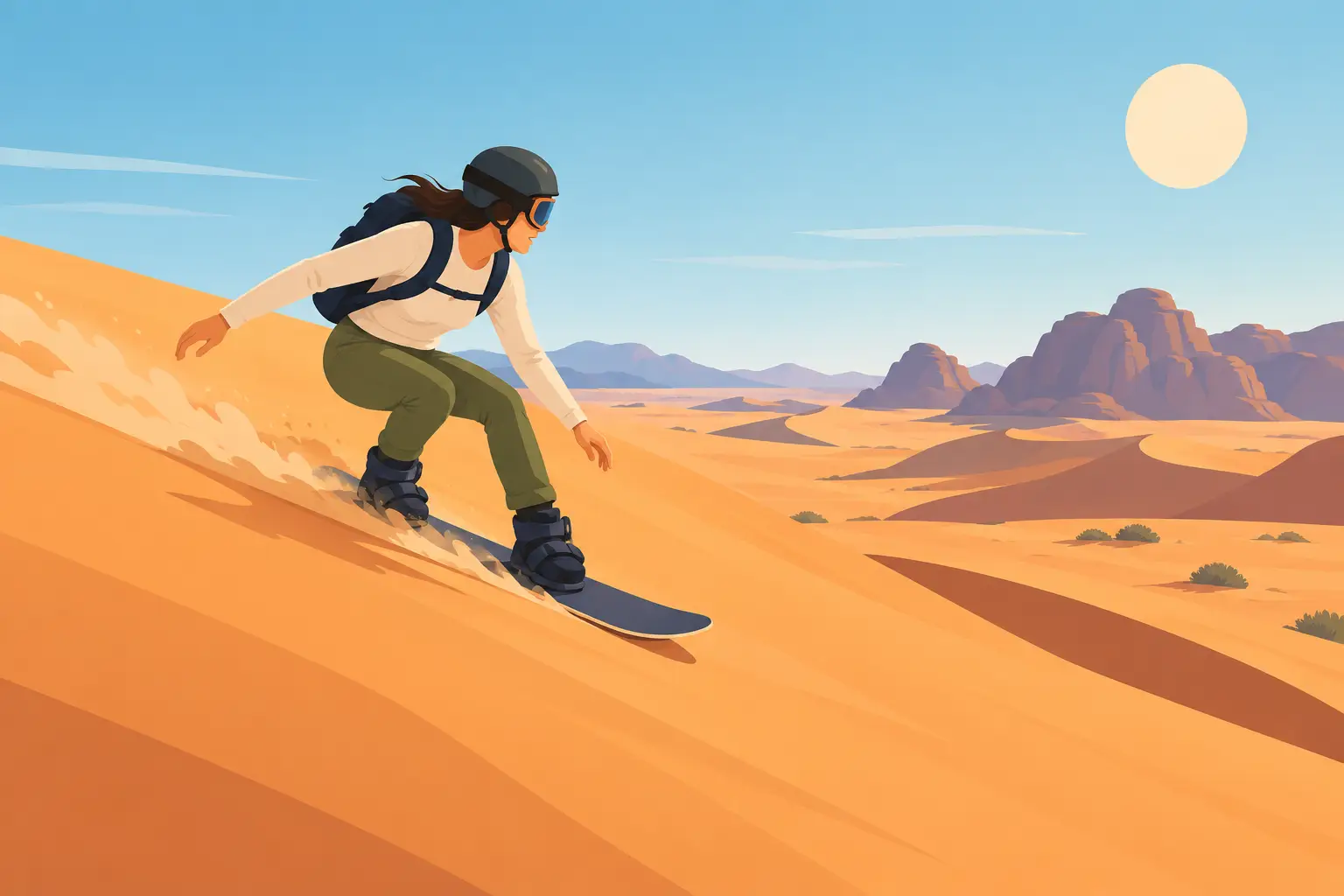
The first time you stand at the crest of a golden dune, board tucked under one arm, the slope can look far steeper than it felt from the 4×4 below. So, is sandboarding difficult? For most first-time visitors, it is easier to try than they expect – and far less intimidating than snowboarding. You do not need previous board-sports experience to enjoy a thrilling ride down Abu Dhabi’s soft, sunlit dunes.
Sandboarding does ask for a little balance, a willingness to get sandy, and a sense of fun. The best part is that a tumble usually means landing in soft sand, laughing with your travel companions, brushing off, and heading back up for another go.
Is Sandboarding Difficult for Beginners?
Sandboarding is beginner-friendly because the board rides on sand rather than hard snow or pavement. There are no ski lifts, icy patches, or crowded runs to worry about. On a guided desert safari, your guide selects a suitable dune and explains how to position your feet, point the board downhill, and keep your weight centered before you begin.
That said, it is not always effortless. Sand creates more resistance than snow, so the board moves more slowly and may stop before you reach the bottom. This makes the experience feel controlled for many beginners, but it also means you cannot expect the same long, fast glide seen in professional sandboarding videos.
The biggest challenge is usually confidence at the top. A dune can seem enormous when you are looking down its face. Start on a gentle slope, take a relaxed stance, and focus on looking ahead rather than at your feet. Once you feel the board move beneath you, the nerves often turn into excitement quickly.
What Makes Sandboarding Easier or Harder?
Not every ride feels the same. The shape and steepness of the dune matter, as does the texture of the sand. Fine, dry sand can allow a smoother run, while heavier or slightly damp sand may create more drag. A steep dune gives you more speed, while a shallow slope is ideal for getting comfortable with the board.
Your chosen riding style also changes the difficulty. Standing up is the classic sandboarding experience and offers the biggest sense of achievement. It requires a stable stance, bent knees, and the ability to stay relaxed as the board gathers speed. Beginners who feel unsure can often sit or lie on the board first, depending on the equipment and guide’s instructions. These options are a playful way to enjoy the descent without worrying about balance.
Fitness helps, but it is not the deciding factor. You do not need to be an athlete to slide down a dune. Walking back up through loose sand, however, can be surprisingly demanding, especially in warm weather. On a safari, the thrill is in taking your time, enjoying the views, and choosing a few good runs rather than treating the dune like a workout challenge.
Sandboarding vs. Snowboarding: The Key Difference
Visitors who have never snowboarded sometimes assume sandboarding will be difficult for the same reasons. In reality, the two activities have important differences. Snowboarding often involves bindings, turning techniques, changing terrain, cold conditions, and the possibility of hard falls. Sandboarding is generally more straightforward: point downhill, balance, and enjoy the ride.
Sand is forgiving when you fall, but it is also less predictable. The board does not carve through sand as cleanly as it does through packed snow. Sharp turns and advanced tricks take practice, and experienced snowboarders may need to adjust their expectations. The goal on a desert safari is usually not to perform perfect turns. It is to feel the rush of descending a sweeping dune surrounded by breathtaking desert views.
For families, couples, and friend groups, that makes sandboarding an accessible shared activity. One person can make a cautious first slide while another goes for a faster standing run, and everyone still gets the same spectacular setting for photos and memories.
How to Make Your First Ride Feel More Comfortable
A few small choices can make a noticeable difference. Wear closed-toe shoes that stay secure on your feet, and choose lightweight, comfortable clothing that lets you bend your knees easily. Sunglasses can protect your eyes from glare, while sunscreen is essential under the open desert sky.
When it is time to ride, listen closely to your guide’s setup instructions. Keep your knees slightly bent instead of locking them, distribute your weight evenly, and avoid leaning too far backward. Looking toward the bottom of the dune helps your body follow the direction of travel. If you start to lose balance, try to step or fall sideways rather than stiffening up.
Do not judge your first attempt too harshly. Some people glide all the way down immediately; others stop halfway or sit down after a few seconds. Both experiences count as sandboarding. The desert is not handing out scores, and a second attempt often feels dramatically easier because you know what the movement feels like.
It also helps to go at the right time of day. Morning safaris can offer cooler conditions and clear light, while evening desert experiences bring softer temperatures and the unforgettable glow of sunset across the dunes. If heat is a concern, tell your tour team before you set out so you can pace yourself, drink water, and enjoy the activity comfortably.
Who May Find Sandboarding More Challenging?
Sandboarding may be harder for travelers with knee, ankle, hip, or balance concerns. The descent itself is brief, but standing on an unstable surface and walking on shifting sand can put pressure on joints. Anyone with an injury, limited mobility, or a medical condition should speak with a qualified professional and let their safari guide know before participating.
Young children can enjoy the fun when supervised and guided appropriately, although their confidence and size may determine whether a seated ride is a better fit than standing. Adults who are nervous about heights may also prefer starting on a smaller slope. There is no need to tackle the tallest dune to have an exciting desert moment.
Weather can influence the experience, too. Windy conditions may bring blowing sand, and intense midday heat can make climbing and waiting outdoors less pleasant. A professional operator will adapt activities to conditions and prioritize guest comfort and safety.
Why Sandboarding Belongs on an Abu Dhabi Desert Safari
Sandboarding is not difficult because it demands expert technique. It is memorable because it turns one of the world’s most beautiful natural landscapes into your playground. One minute you are watching ripples of sand stretch toward the horizon; the next, you are carving a short path down a glowing dune with the warm desert breeze around you.
It also fits naturally into a full desert adventure. After the energy of dune bashing, sandboarding gives you a chance to step into the landscape rather than simply admire it from the vehicle. A camel ride, Arabian refreshments, a BBQ dinner, and captivating evening entertainment can follow, creating an experience that balances adrenaline, hospitality, and the quiet beauty of the desert.
At Abu Dhabi Desert Safari, guides help guests of different confidence levels enjoy the dunes at their own pace. Whether you want one photo-worthy run or several energetic descents with friends, sandboarding can be a bright highlight of your day in the UAE.
Wear shoes you can shake the sand from, keep your expectations playful, and take that first gentle push over the edge. The dune may look challenging from the top, but the smile at the bottom usually arrives before you do.

