The desert changes character when the last orange light slips behind the dunes. Engines quiet down, the sand cools beneath your feet, and a sky that city lights often hide begins to fill with stars. A stargazing tour experience in Abu Dhabi is not simply about looking upward. It is a full evening of desert adventure, Arabian hospitality, and the rare pleasure of being far enough from the skyline to see the night clearly.
For visitors with only a few days in the UAE, this is an easy way to combine the moments they came for: golden dunes, a thrilling ride in a 4×4, a sunset photograph that needs no filter, a relaxed camp dinner, and a starlit desert memory to take home. The best format depends on whether you want high-energy adventure, a family evening, or a slower, more private escape.
From Golden Dunes to a Star-Filled Sky
A desert evening often begins before sunset, when the heat has started to soften but the dunes still shine in rich shades of gold. Pickup from your Abu Dhabi hotel removes the guesswork of arranging transport or navigating unfamiliar roads. As the city fades behind you, the wide-open landscape becomes part of the anticipation.
For many travelers, dune bashing is the first big rush. A skilled driver guides the 4×4 up steep sand slopes and down sweeping drops, turning the desert into a natural roller coaster. It is exciting, scenic, and a completely different perspective from viewing the dunes at ground level. If you prefer a gentler outing, tell your operator in advance. Families with young children, guests prone to motion sickness, and travelers seeking a quieter evening may prefer a softer drive or a private itinerary.
There is usually time to try classic desert activities before night arrives. Sandboarding offers a playful challenge on the slopes, while a short camel ride creates the kind of desert image many visitors have imagined before arriving in the UAE. Neither activity requires prior experience. The point is to enjoy the landscape, not to perform like a professional athlete.
Then comes the transition that makes an evening safari special. The sun lowers, shadows stretch across the sand, and the desert becomes beautifully calm. This is the time for photographs, for walking a few steps away from the group, and for appreciating how enormous the horizon feels.
What Happens at a Desert Stargazing Camp
After the sunset stop, guests typically continue to a Bedouin-style desert camp. Lanterns, low seating, Arabian carpets, and the warm scent of grilled food set the scene for a relaxed night. This is where an action-packed safari slows down and becomes a social, cultural experience.
Arabian coffee and refreshments offer a welcoming start. Depending on the selected package, you may enjoy henna art, traditional attire for photos, camel encounters, or live entertainment such as a Tanoura performance and belly dancing. A BBQ dinner brings everyone together, with a mix of grilled dishes, salads, breads, and vegetarian-friendly options commonly available when requested ahead of time.
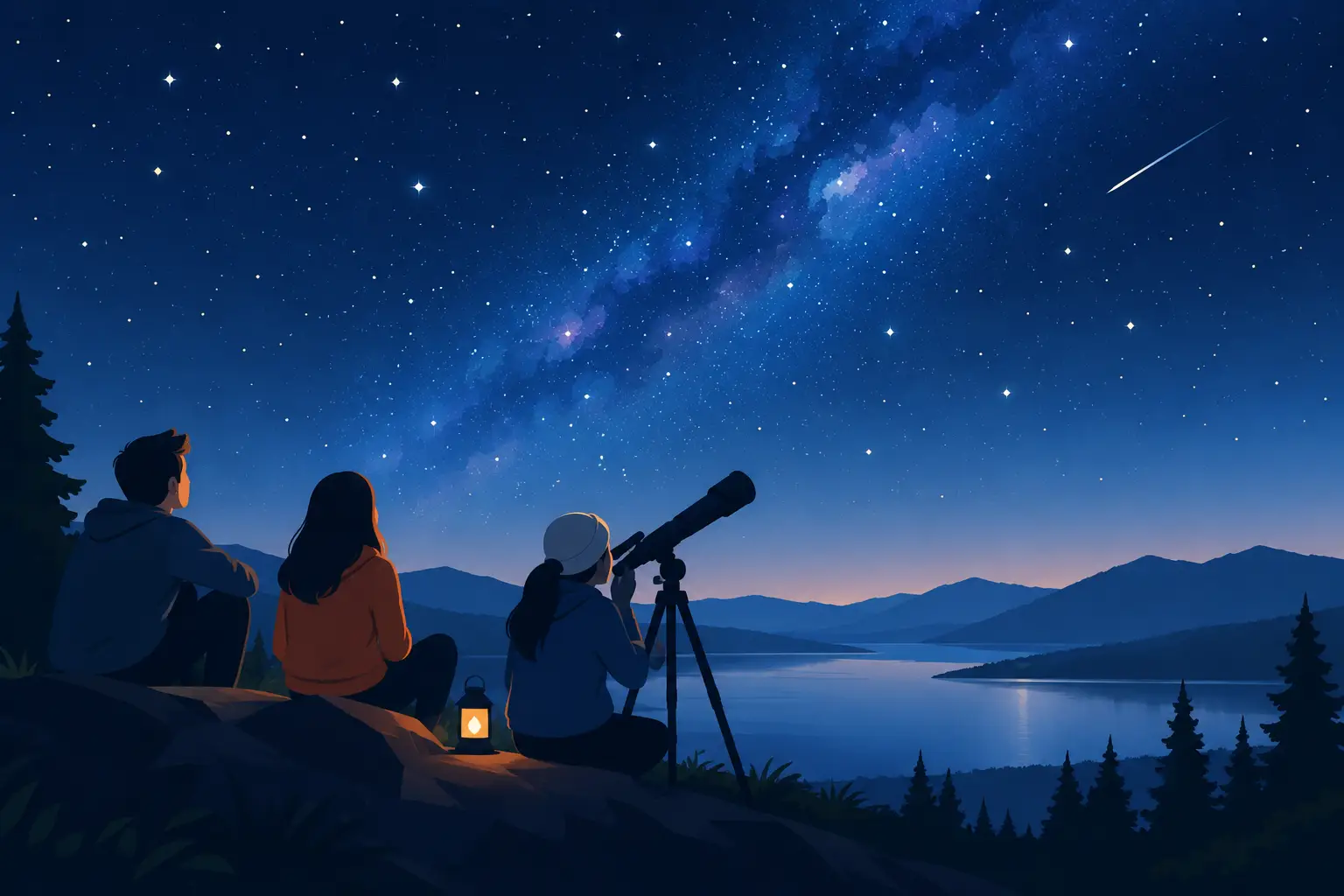
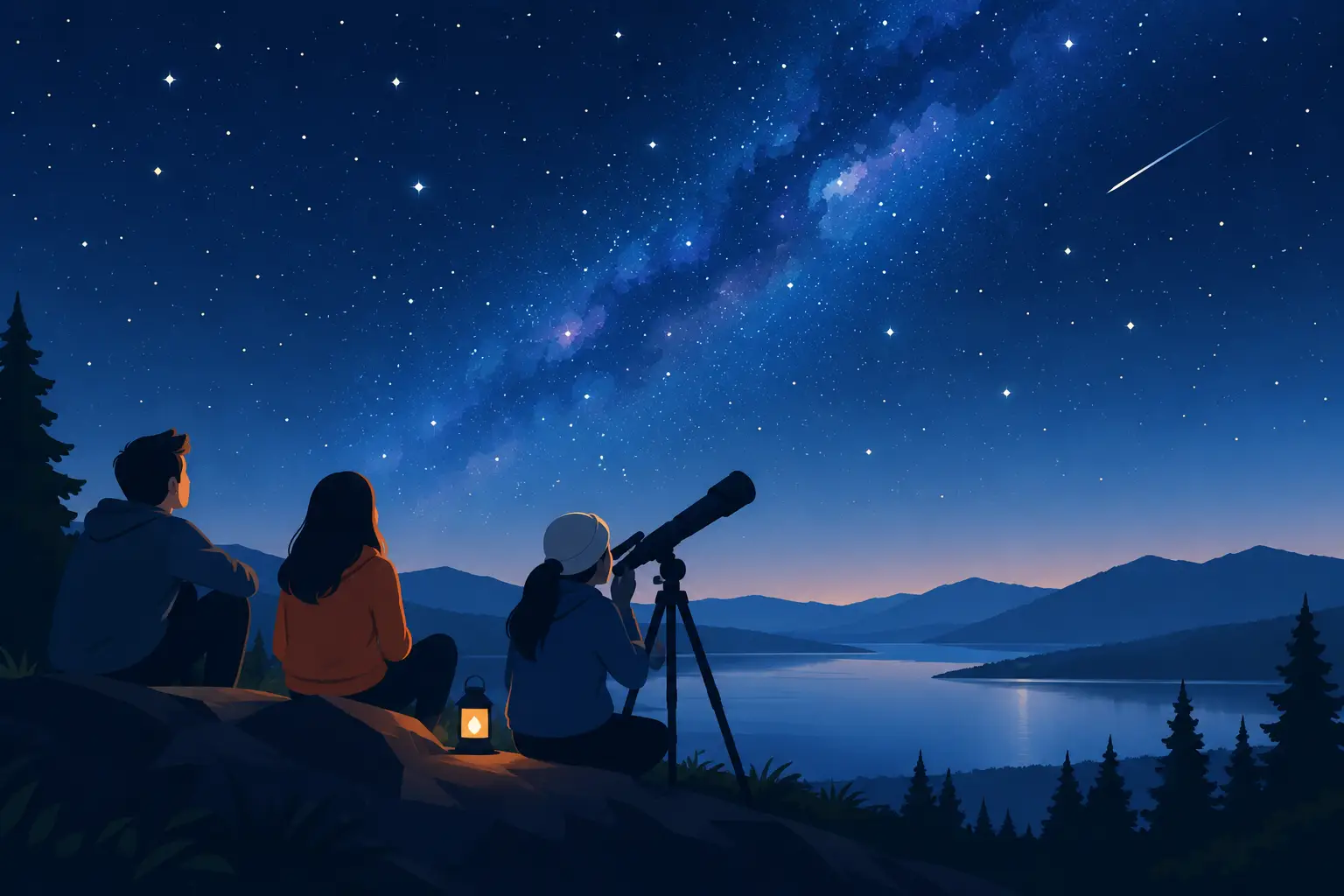
The stargazing portion feels most rewarding after dinner, once camp lights are kept low and attention turns back to the sky. In clear conditions, the desert’s reduced light pollution makes stars appear sharper and more numerous than they do from a hotel balcony or downtown restaurant. You may see bright planets, recognizable constellations, and the soft sweep of the Milky Way during the right season and moon phase.
A true stargazing tour experience is guided as much by atmosphere as astronomy. You do not need to know every constellation to feel the impact of the view. Simply sitting on the sand with cool evening air around you can be the highlight. Still, a knowledgeable guide can add meaning by pointing out major stars, sharing navigation traditions, or explaining why the moon and seasonal weather affect visibility.
Why the moon phase matters
The brightest starry skies usually arrive near the new moon, when moonlight does not wash out dimmer stars. A full moon creates its own magic, illuminating the dunes in silver light, but fewer stars will be visible. Neither is automatically better. Choose a darker night for deeper sky viewing and astrophotography, or choose a brighter moonlit evening if you want the dunes themselves to remain clearly visible after dark.
Cloud cover, humidity, wind, and dust also play a role. Abu Dhabi’s desert is often wonderfully clear, yet nature always has the final word. A reputable tour should frame stargazing as a weather-dependent highlight rather than promise a specific astronomical sighting.
Choosing the Right Desert Night for Your Group
An evening desert safari is the most convenient choice for first-time visitors. It bundles transportation, dune activities, a camp setting, dinner, and entertainment into one memorable outing. It suits families, couples, solo travelers, and groups of friends who want the broadest taste of the desert in a single night.
Couples celebrating a honeymoon, anniversary, or proposal may prefer a romantic private dinner setup. With more space, personal service, and fewer distractions, the desert feels especially intimate after sunset. The trade-off is that a private experience may focus more on dining and atmosphere than large-camp entertainment. That can be exactly the right choice when the goal is connection rather than a packed activity schedule.
Overnight camping is ideal for travelers who want more time under the sky. Rather than returning to the city soon after dinner, you stay in the desert and wake to a quiet sunrise. This option gives you a better chance to settle into the nighttime stillness, although it requires a little more flexibility and comfort with basic outdoor conditions.
Adventure-focused groups can pair evening stargazing with quad biking or extended dune activities. Photography lovers may want a sunset and stargazing-oriented schedule with extra time away from bright camp lights. At Abu Dhabi Desert Safari, package options can be shaped around the pace you want, from a lively group celebration to a more exclusive desert escape.
How to Prepare for Better Stargazing
You do not need specialized gear to enjoy the sky, but a few practical choices make the evening more comfortable. Wear light, breathable clothing for the afternoon and bring a light jacket or wrap for later. Desert temperatures can drop noticeably after sunset, particularly between late fall and early spring.
Comfortable closed-toe shoes help when walking on sand, although sandals are fine for relaxed camp time. Bring your phone or camera, but resist using a bright screen continuously once the stars appear. Dim your display or use a red-light setting if available, since your eyes need time to adjust to darkness.
For photography, a tripod and a camera that allows manual settings will make a significant difference. Wide-angle shots work beautifully when they include dune contours, camp lanterns in the distance, or a camel silhouette beneath the sky. Phone cameras can capture the mood, especially in night mode, but they may not show the same detail as a dedicated camera. Ask your guide where it is safe to step away for photos, and never wander beyond the designated area after dark.
It is also smart to eat lightly before intense dune bashing and let your guide know about medical concerns, pregnancy, mobility needs, or motion sensitivity before departure. Desert safaris can be adapted in many ways, but only if the team knows what will make you comfortable.
The Desert Gives the Night Its Meaning
A city rooftop can offer a polished view of the sky, but it cannot recreate the feeling of the desert around you. Out on the dunes, the darkness has texture: soft sand underfoot, a breeze moving across the camp, distant tire tracks fading into the horizon, and a silence that makes every visible star feel more vivid.
That contrast is what makes this experience so memorable for UAE visitors. One hour, you are racing across sculpted dunes and watching the sun paint the landscape. Later, you are sharing dinner, enjoying Arabian entertainment, and looking up at a sky that seems far larger than the one you left behind.
When choosing your evening, leave room for that unhurried final moment after the activities are done. Put the camera down for a few minutes, let your eyes adjust, and look up. The desert is at its most generous when you give it time to grow quiet.